How Often Should You Service a BMW Transmission?
BMW calls the fluid in most of its automatic transmissions "lifetime" fluid and doesn't list a regular change. At German Autowerke, we recommend a transmission fluid service about every 50,000 miles. ZF, the company that builds most BMW automatics, also recommends changing the fluid. Its general guidance is longer, but it says to go sooner with heat or heavy use, and Southern California driving often counts.
Here's why we recommend 50,000 miles and what the service includes.
What does "lifetime fluid" really mean?
When BMW says "lifetime," it doesn't mean the fluid lasts forever. It generally means the fluid isn't on the scheduled maintenance list during the original warranty and service period. Many BMWs stay on the road long after that.
Transmission fluid does a lot of work. It lubricates, cools, and carries the hydraulic pressure that makes the transmission shift. Over time, heat breaks it down and it picks up fine wear material. Old fluid doesn't usually cause sudden failure, but it can lead to rougher shifting and more wear over the years.
What does ZF recommend?
ZF makes the 6-speed and 8-speed automatics used in many BMWs. Its fluid information describes the transmission as filled for life under normal use, but it still recommends an oil change at about 150,000 km, or roughly 93,000 miles. ZF says to change it sooner in hard use, such as high temperatures or heavy loads, or when the car's service history isn't known.
Why do we recommend 50,000 miles?
We recommend a fluid and filter service about every 50,000 miles. Many independent BMW and ZF specialists suggest a similar range. It's a small job compared with transmission repair, and it replaces the fluid before heat and wear break it down. If your BMW is past 50,000 miles and the fluid has never been changed, now is a good time to ask us about it.
Does Southern California driving count as hard use?
Often, yes. Hard use isn't just towing or track days. It includes:
- Stop-and-go traffic on the 5, 78, or 76
- Long climbs, like the I-15 grades toward Temecula
- Hot inland days and summer trips to the desert
- Lots of short trips where the car rarely settles into steady cruising
All of these add heat, and heat is what wears out transmission fluid. If that sounds like your driving, our post on getting your German car ready for summer heat has more tips.
What are the signs your BMW transmission needs attention?
- Harsh, delayed, or slipping shifts
- Shudder at low speed or when accelerating gently
- Hesitation when shifting into Drive or Reverse
- A transmission warning or the car going into limp mode
- Fluid leaks under the car
- A burnt smell
If you notice any of these, have it checked before you assume the transmission is failing. Many issues can be handled with service, software, or a small repair. Our guide to transmission service vs. transmission replacement explains the difference.
What's included in a BMW transmission service?
A proper service usually includes:
- Draining the old fluid
- Replacing the filter (on many ZF 8-speeds, the filter is built into the oil pan, so the pan is replaced)
- Refilling with the correct ZF-approved fluid
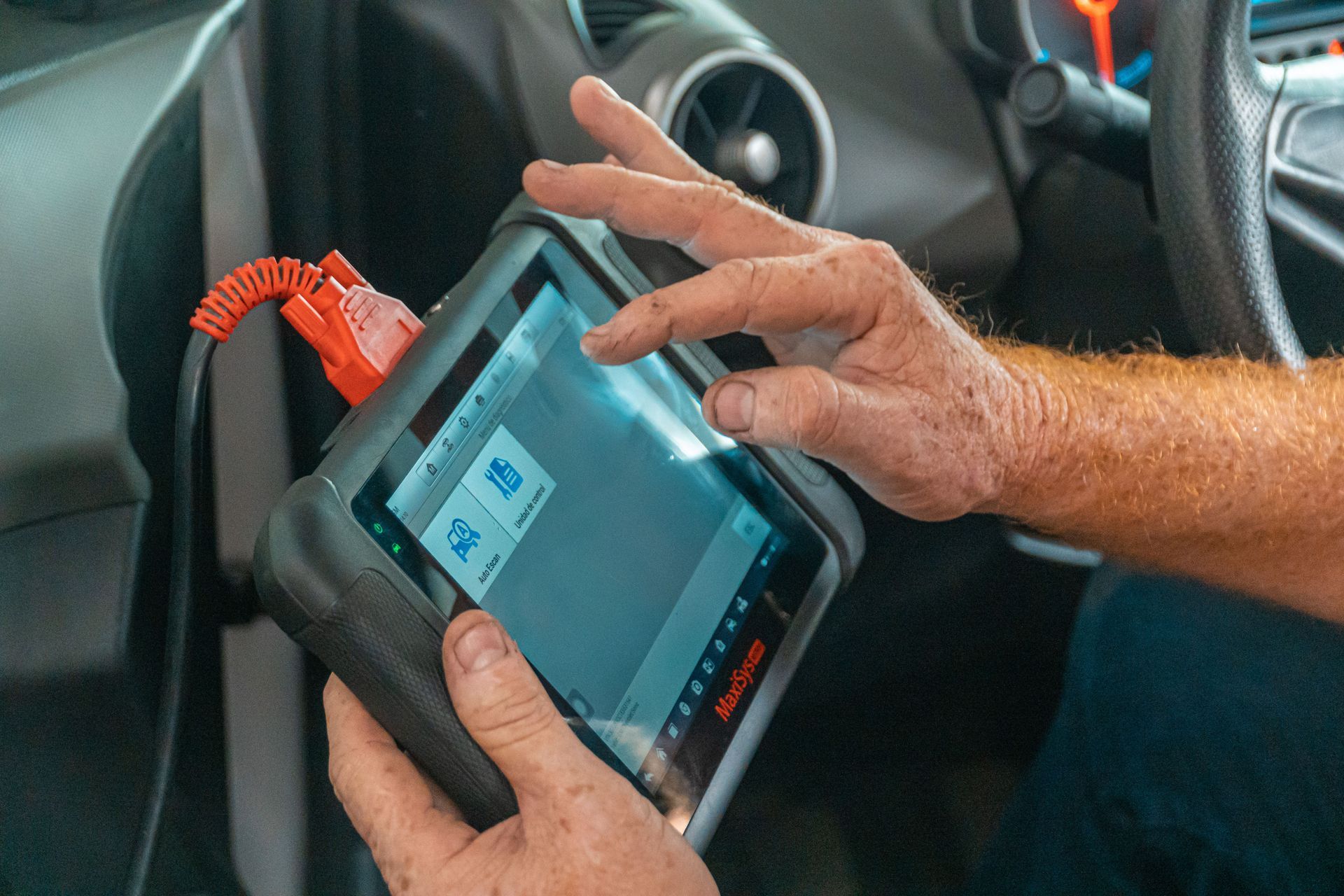
- Checking the fluid level at the correct temperature, using a scan tool
- Checking for leaks and stored transmission codes
The fill step matters. These transmissions don't have a traditional dipstick, so the level has to be set at a specific temperature.
Some BMW M models, such as earlier M3 and M4 generations, use a dual-clutch transmission (DCT) instead. Those have their own needs. Our DSG service guide explains how dual-clutch service differs.
Is it too late to service a high-mileage transmission?
Not usually. Many people hear that changing old fluid can cause problems. In most cases, a properly done service on a healthy transmission is still a good idea. If the transmission already shows symptoms, we'll check it first and tell you honestly what service can and can't fix.
BMW transmission service in Oceanside
German Autowerke has worked on BMWs since 1989. Our owner, Vince Tinoco, is a BMW Master certified technician, and our team uses factory-level diagnostic tools. If you're not sure whether your BMW is due, we'll look at its mileage and history and give you a straight recommendation. Qualifying repairs are backed by our 4-year/40,000-mile in-house warranty and a 3-year/36,000-mile nationwide warranty for when you're traveling (warranty details). Learn more about our transmission service, or call (760) 721-3321.
FAQ
Does BMW transmission fluid really last a lifetime?
Not in the way most people think. BMW doesn't list a regular change, but ZF, the transmission maker, still recommends one.
How often should I change my BMW transmission fluid?
We recommend about every 50,000 miles. ZF's general guidance is about 93,000 miles, but it advises going sooner in hard use, and heat and traffic here often count.
Can I check my BMW transmission fluid myself?
On most modern BMWs, no. There's no dipstick, and the level has to be checked at a set temperature with a scan tool.
Will a fluid change fix rough shifting?
Sometimes. Fresh fluid and a software check can help, but some problems need repair. A diagnosis tells you which.