Why German Cars Use Synthetic Oil
Why German Cars Use Synthetic Oil: What Every Owner Should Know
Why do German cars require synthetic oil? Most modern BMW, Mercedes-Benz, Audi, Porsche, Volkswagen, and MINI engines are designed to operate with synthetic motor oils that meet specific manufacturer requirements. These oils provide consistent lubrication, resist high-temperature breakdown, help control engine deposits, and protect components such as turbochargers, timing chains, and variable valve timing systems.
However, not all synthetic oils are suitable for every German vehicle. Choosing the correct manufacturer-approved oil is just as important as choosing synthetic oil in the first place.
Understanding why German manufacturers specify certain engine oils can help you make better maintenance decisions, prevent unnecessary engine wear, and protect your vehicle's long-term reliability.
What Is Synthetic Engine Oil?
Synthetic engine oil is a specially formulated lubricant designed to provide reliable engine protection across a wide range of operating temperatures and driving conditions.
Compared with conventional motor oil, synthetic formulations generally offer improved resistance to oxidation, thermal breakdown, and deposit formation.
Synthetic oils use highly refined or chemically engineered base oils combined with specialized additives that help reduce friction, control contamination, and protect internal engine components.
Synthetic Oil vs. Conventional Oil: What's the Difference?
Both synthetic and conventional motor oils lubricate an engine, but their performance characteristics can differ significantly.
Conventional motor oil is primarily produced from refined petroleum and may be suitable for engines designed to use it.
Synthetic motor oil is formulated to deliver more consistent performance under demanding operating conditions, including temperature extremes and extended periods of engine operation.
For modern German vehicles, synthetic oil is often a manufacturer requirement rather than an optional upgrade.
Why Do German Engines Need Synthetic Oil?
German automotive manufacturers are known for producing sophisticated engines that balance performance, fuel efficiency, and emissions requirements.
Many of these engines incorporate turbocharging, direct fuel injection, variable valve timing, and precisely controlled lubrication systems.
These technologies place significant demands on engine oil.
Here are five important reasons why synthetic oil is commonly specified for German vehicles.
1. Superior Protection at High Engine Temperatures
Modern German engines can generate substantial heat, particularly during highway driving, heavy acceleration, and prolonged operation under demanding conditions.
Turbocharged engines present additional challenges because the turbocharger operates at extremely high rotational speeds and temperatures.
High-quality synthetic oils are formulated to resist oxidation and thermal degradation, helping maintain effective lubrication as operating temperatures increase.
Why this matters: Oil that maintains its protective properties under heat helps reduce the risk of accelerated wear, deposits, and lubrication-related engine damage.
2. Improved Lubrication During Cold Starts
Engine startup is a critical period for lubrication because oil must circulate throughout the engine before all moving components receive their normal oil supply.
Many German engines use low-viscosity synthetic oils formulated for improved flow at lower temperatures.
Proper oil flow helps lubricate components such as camshafts, crankshaft bearings, timing chain tensioners, and turbochargers.
Even in Southern California's relatively mild climate, proper cold-start lubrication remains important.
Why this matters: Using the manufacturer-specified oil helps ensure that critical components receive appropriate lubrication during startup and normal operation.
3. Protection for Turbocharged Engines
Turbocharging is common across modern BMW, Mercedes-Benz, Audi, Porsche, and Volkswagen engines.
A turbocharger uses exhaust energy to compress incoming air, allowing an engine to produce more power from a relatively small displacement.
However, turbocharger bearings require a continuous supply of properly specified engine oil.
The oil helps lubricate moving components and carry away heat.
Synthetic oils formulated for turbocharged applications offer important advantages in resisting heat-related degradation and deposit formation.
Why this matters: Using the wrong oil, neglecting oil changes, or allowing the oil level to drop can increase the risk of turbocharger damage.
4. Protection for Timing Chains and Variable Valve Timing Systems
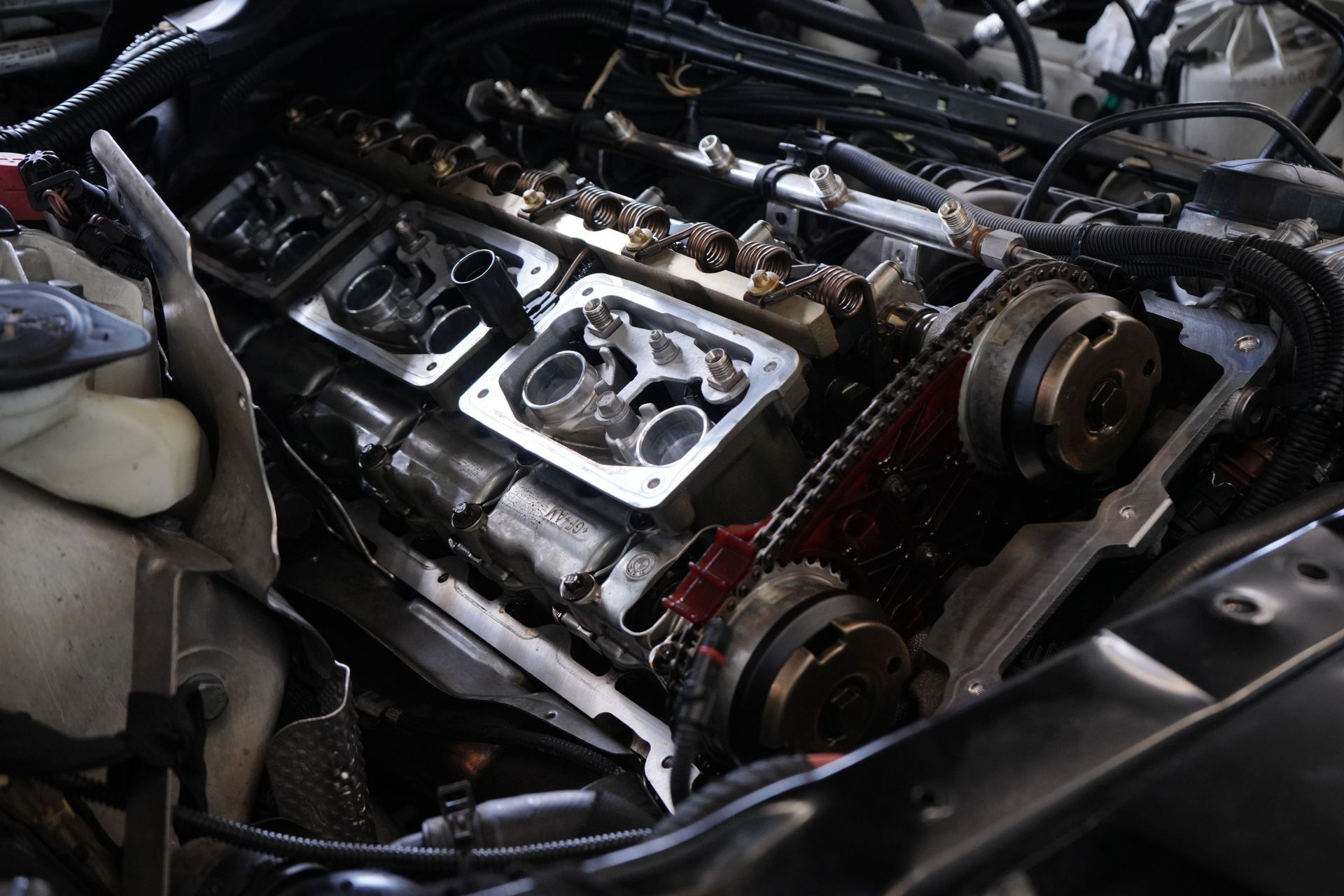
Many German engines use timing chains and sophisticated variable valve timing systems to control engine performance and efficiency.
These systems often depend on engine oil for lubrication and hydraulic operation.
For example, BMW's VANOS system and certain Mercedes-Benz camshaft adjustment systems rely on properly controlled oil pressure.
Timing chain tensioners may also use hydraulic pressure to maintain appropriate chain tension.
Oil that becomes excessively contaminated or develops sludge can interfere with oil passages and hydraulic components.
Why this matters: Regular oil changes using the correct manufacturer-approved oil help maintain proper lubrication and oil cleanliness. However, proper maintenance cannot eliminate every timing chain or tensioner failure, particularly when a component has a known design or manufacturing issue.
5. Better Resistance to Sludge and Engine Deposits
As an engine operates, motor oil is exposed to combustion byproducts, heat, moisture, and contaminants.
Over time, these conditions can contribute to oil degradation and deposit formation.
Synthetic oils generally offer improved resistance to oxidation and deposit formation compared with conventional oils.
This is particularly beneficial in engines with high operating temperatures, turbochargers, and complex internal oil passages.
Why this matters: Cleaner oil passages and properly maintained lubrication systems support reliable engine operation and help reduce avoidable wear.
Why Manufacturer Oil Specifications Matter More Than the Synthetic Label
One of the most common misconceptions about European vehicle maintenance is that any full synthetic oil with the correct viscosity is acceptable.
That is not necessarily true.
Two oils can both be labeled 5W-30 full synthetic and still have completely different manufacturer approvals.
German automakers establish specific lubricant requirements based on engine design, operating conditions, emissions systems, and other engineering considerations.
Understanding German Manufacturer Oil Approvals
Different manufacturers use their own oil approval systems.
ManufacturerExamples of Oil SpecificationsBMWBMW Longlife-01, Longlife-04, Longlife-17 FE+Mercedes-BenzMB-Approval 229.5, 229.51, 229.52Audi / VolkswagenVW 502 00, VW 504 00, VW 507 00, VW 508 00PorschePorsche A40, C30, C40
Important: These are examples of manufacturer oil specifications, not interchangeable recommendations. The correct approval depends on the specific engine, model year, fuel type, and applicable manufacturer instructions.
A synthetic oil that is suitable for one BMW engine may not meet the requirements of another BMW, even when both engines use the same viscosity grade.
The same applies to Mercedes-Benz, Audi, Porsche, Volkswagen, and MINI vehicles.
What Do 0W-20, 5W-30, and 5W-40 Mean?
These numbers describe an oil's viscosity characteristics.
The first number, followed by the letter W, describes its low-temperature performance.
The second number indicates its viscosity classification at normal engine operating temperatures.
For example, a 0W-20 oil has different viscosity characteristics than a 5W-40 oil.
Neither is automatically better.
The correct choice depends on what the engine manufacturer specifies.
The most important consideration is using an oil with both the correct viscosity and the required manufacturer approval.
What Happens If You Put the Wrong Oil in a German Car?
Using an oil that does not meet the manufacturer's specifications can compromise engine protection.
Depending on the engine and how far the oil differs from its requirements, potential consequences may include increased wear, reduced lubrication performance, excessive deposits, improper operation of oil-controlled components, or reduced protection for turbocharger bearings.
Certain engines also require oils designed to protect emissions-control equipment, including diesel particulate filters and gasoline particulate filters.
Using an unsuitable oil formulation can contribute to emissions-system problems over time.
Putting the wrong oil in an engine does not automatically mean immediate damage will occur. However, the risk increases when the oil does not provide the protection the engine was designed to receive.
If you discover that an incorrect oil was used during a recent service, consult a qualified German automotive specialist to determine whether the oil should be replaced.
How Often Should German Cars Have Their Synthetic Oil Changed?
Synthetic oil can maintain its performance longer than conventional oil under many conditions, but it still requires regular replacement.
There is no single oil change interval that is correct for every BMW, Mercedes-Benz, Audi, Porsche, or Volkswagen.
Some modern German vehicles have manufacturer maintenance schedules that permit oil changes at approximately 10,000 miles or 12 months, while others require different intervals.
Actual service requirements depend on the vehicle, engine, operating conditions, and maintenance schedule.
Can You Go 10,000 Miles Between Synthetic Oil Changes?
Possibly, if your manufacturer permits that interval and your vehicle's operating conditions support it.
However, a 10,000-mile interval should not automatically be applied to every German vehicle.
Frequent short trips, extended idling, repeated stop-and-go driving, and demanding operating conditions can place additional stress on engine oil.
A vehicle driven primarily on short trips around Oceanside or Carlsbad may experience different oil conditions than one driven mostly on longer highway trips.
Older engines, vehicles experiencing oil consumption, and engines with certain known mechanical concerns may also benefit from an individualized maintenance plan.
At German Autowerke, we consider manufacturer recommendations, mileage, driving habits, and vehicle condition when discussing appropriate oil service intervals.
Signs Your German Car May Need an Oil Service or Inspection
Modern German vehicles typically have maintenance reminders, but drivers should also recognize potential signs of lubrication-related problems.
Low Engine Oil Level
Some engines consume oil between services, while others may develop leaks from gaskets, seals, or other components.
Repeatedly low oil levels should be investigated rather than continually topping off the engine without identifying the cause.
Unusual Engine Noises
Ticking, rattling, or knocking noises can sometimes indicate lubrication problems.
However, engine noises can have many causes, including worn mechanical components or timing system concerns.
An oil change alone should not be assumed to correct an unusual engine noise.
Oil Pressure Warning Light
An oil pressure warning is different from a routine oil service reminder.
If your vehicle displays a low oil pressure warning, stop driving as soon as it is safe and shut off the engine.
Continuing to operate an engine with insufficient oil pressure can cause severe internal damage.
Check Engine Light
Certain check engine faults can be associated with oil-controlled systems, including variable valve timing.
A check engine light does not automatically indicate an oil problem, but proper diagnosis may include checking the oil level, condition, pressure, and manufacturer specifications.
How German Autowerke Approaches European Vehicle Oil Service
At German Autowerke in Oceanside, California, we specialize in maintaining and repairing BMW, Mercedes-Benz, Audi, Porsche, Volkswagen, and MINI vehicles.
Our approach to oil service goes beyond selecting a bottle labeled full synthetic.
We identify the oil specification appropriate for the vehicle, use a suitable oil filter, and follow the correct service procedures for the engine.
During oil service, our technicians can also inspect for developing oil leaks, verify the engine oil level, review maintenance requirements, and identify conditions that may warrant further attention.
This is particularly important for German vehicles equipped with electronic oil-level measurement systems, turbochargers, and advanced engine lubrication systems.
To learn more about our process, visit our German vehicle oil change service page.
Frequently Asked Questions About Synthetic Oil in German Cars
Do all German cars require synthetic oil?
Most modern gasoline and diesel German vehicles specify synthetic engine oils that meet particular manufacturer requirements. However, some older or classic German vehicles have different lubrication specifications. Always follow the requirements for the specific engine.
Can I use any full synthetic oil in my BMW?
No. A BMW may require an oil meeting a particular BMW Longlife specification. The correct viscosity alone does not establish compatibility. Check the manufacturer's oil requirements for your specific model and engine.
Do Mercedes-Benz vehicles need special synthetic oil?
Many Mercedes-Benz engines require oil carrying a specific Mercedes-Benz approval, such as an applicable MB-Approval 229-series specification. The required approval varies by engine and model year.
Is 5W-30 synthetic oil suitable for Audi and Volkswagen?
It may be suitable for certain engines, but viscosity alone is not enough. Audi and Volkswagen engines frequently require specific VW oil approvals. Confirm the appropriate specification before selecting an oil.
Is synthetic oil better for high-mileage German cars?
The correct synthetic oil can provide effective protection for a high-mileage engine. However, switching to a different viscosity or formulation solely because an engine has high mileage is not always appropriate. Oil selection should account for manufacturer requirements and the engine's mechanical condition.
Can synthetic oil prevent timing chain failure?
Properly specified synthetic oil and regular maintenance help protect timing chain components, but they cannot guarantee against timing chain failure. Chain wear, guide deterioration, tensioner problems, and mechanical defects can occur even in properly maintained engines.
Is it safe to exceed the recommended synthetic oil change interval?
Exceeding the manufacturer's recommended maintenance interval is not advisable. Even synthetic oil gradually accumulates contaminants and experiences additive depletion and degradation. Follow the applicable service schedule and account for demanding driving conditions.
Protect Your German Engine With the Right Oil and Maintenance
German vehicles deliver an exceptional combination of performance, efficiency, and engineering sophistication. Maintaining those qualities requires more than simply using a high-quality motor oil.
The correct oil must meet the specific lubrication requirements established for your engine.
Using manufacturer-approved synthetic oil, maintaining appropriate oil change intervals, monitoring oil consumption, and addressing leaks or abnormal engine noises can help protect your investment.
Schedule Your German Vehicle Oil Service in Oceanside, CA
German Autowerke has served the Oceanside and North County San Diego community since 1989.
Our experienced technicians specialize in the maintenance and repair of BMW, Mercedes-Benz, Audi, Porsche, Volkswagen, and MINI vehicles.
Whether you're due for routine maintenance, experiencing excessive oil consumption, or uncertain which synthetic oil your vehicle requires, our team can help.
Protect your engine with maintenance tailored to its engineering.
Schedule your German vehicle oil service with German Autowerke.
German Autowerke
1800 Ord Way
Oceanside, CA 92056
(760) 721-3321