Great Wheel Alignment vs Poor Alignment and How to Tell The Difference
A wheel alignment is one of those services that sounds simple until you get a car back and it feels worse than it did before. The reason is that a great alignment is more than numbers on a screen. It shows up in how the car tracks, how the steering wheel sits, and how your tires wear over time.
A poor alignment might look acceptable on paper, but it can still leave you fighting the wheel on the highway or chewing through tread faster than it should.
What A Proper Alignment Feels Like
A quality alignment feels calm. The steering wheel sits centered when you’re going straight, and the car tracks without constant corrections. It should feel steady on the freeway, not floaty or twitchy, and it should return to center naturally after a turn.
You also tend to notice it in the small stuff. The car feels more predictable when you change lanes, it behaves the same left and right, and it doesn’t feel like it has a mind of its own when you hit light grooves or road seams.
Where Poor Alignments Usually Go Wrong
Most bad alignments are not dramatic mistakes but shortcuts. Sometimes the technicians set the tone and call it done, even when other angles are out. Sometimes the steering wheel ends up slightly off-center because the final adjustment wasn’t balanced side-to-side. Other times, the alignment is attempted with worn suspension parts, so the numbers might look decent sitting still, but the angles shift as soon as you’re driving.
Another common issue is skipping the basics that affect accuracy, like tire pressure or ride height. If a tire is low or a suspension component is sagging, the measurements can be misleading. A quick adjustment can improve the printout without actually changing how the car behaves.
Test Drive Cues That Separate Good From Bad
You can usually tell a lot in the first mile after an alignment.
If the steering wheel is off-center on a straight road, something wasn’t set correctly. If the car drifts to one side on flat pavement, it may be alignment-related, but it can also be tire pull, so it needs a second look. If the vehicle feels nervous at speed, like you’re always making tiny corrections, that can be toe-related, or it can point to worn steering components that an alignment alone can’t cure.
Pay attention to gentle braking, too. If the car darts or feels unstable when you slow down, it may not be purely the brakes. Front-end angles and worn parts can show up most when the weight shifts forward.
Tire Wear Patterns That Tell You The Alignment Quality
Tires keep receipts. If the alignment is off, the tread usually shows it:
- Inside edge wear often points to too much negative camber or toe issues
- Outside edge wear can come from camber problems, underinflation, or aggressive cornering habits
- Feathering, where the tread feels sharp in one direction, is commonly tied to the toe being off
- Cupping, the scalloped pattern, often points more toward shocks or struts, but alignment can contribute
If you keep seeing the same pattern after alignments, that’s a sign the root cause is being missed, not that you’re unlucky.
Owner Mistakes That Undercut Alignment Results
One big mistake is waiting until the tires are already ruined to get an alignment. Once the tread is uneven, the tire can stay noisy or shaky even after the angles are corrected. Another common one is replacing tires but skipping the alignment because the car feels okay. New tires can mask minor alignment issues for a short while, then the wear shows up faster than expected.
We also see people ignore small steering or suspension looseness because it’s not clunking yet. A little play in a tie rod or control arm bushing can make an alignment hard to hold. If the parts are moving, the angles are moving too.
How To Make A Good Alignment Last
A good alignment lasts longer when the rest of the car is set up to support it. Keep tire pressures consistent, rotate tires on schedule, and avoid hard curb hits and potholes when you can. If you have suspension work done later, especially anything involving control arms, tie rods, or struts, plan on checking alignment again. Those parts directly affect angles.
Also, trust the early signals. If the steering wheel starts drifting off-center or you notice new uneven wear, don’t wait until the tires are loud or bald. Catching it early usually keeps the fix simple.
Get a Wheel Alignment in Oceanside, CA with German Autowerke Inc.
If your car pulls, the steering wheel sits off-center, or your tires are wearing unevenly, we can check the alignment, inspect for looseness that would keep it from holding, and show you clear before-and-after measurements.
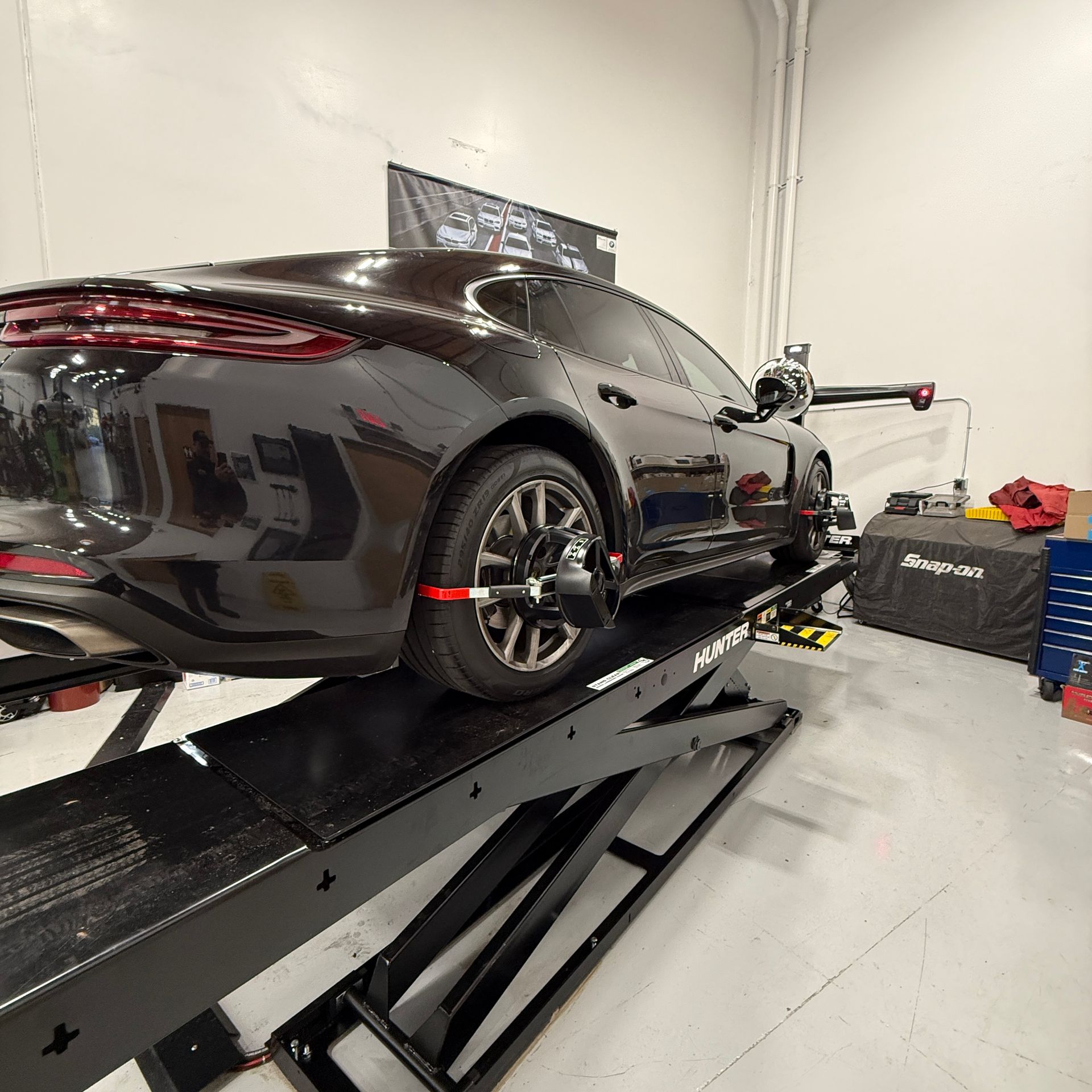
We’ve invested in a new alignment rack and a Hunter Hawkeye Elite system, so the angles can be set precisely to match how German suspensions are designed to drive.
Call German Autowerke today, and we’ll get you scheduled and dial everything in the right way with our brand new, state of the art alignment rack.